
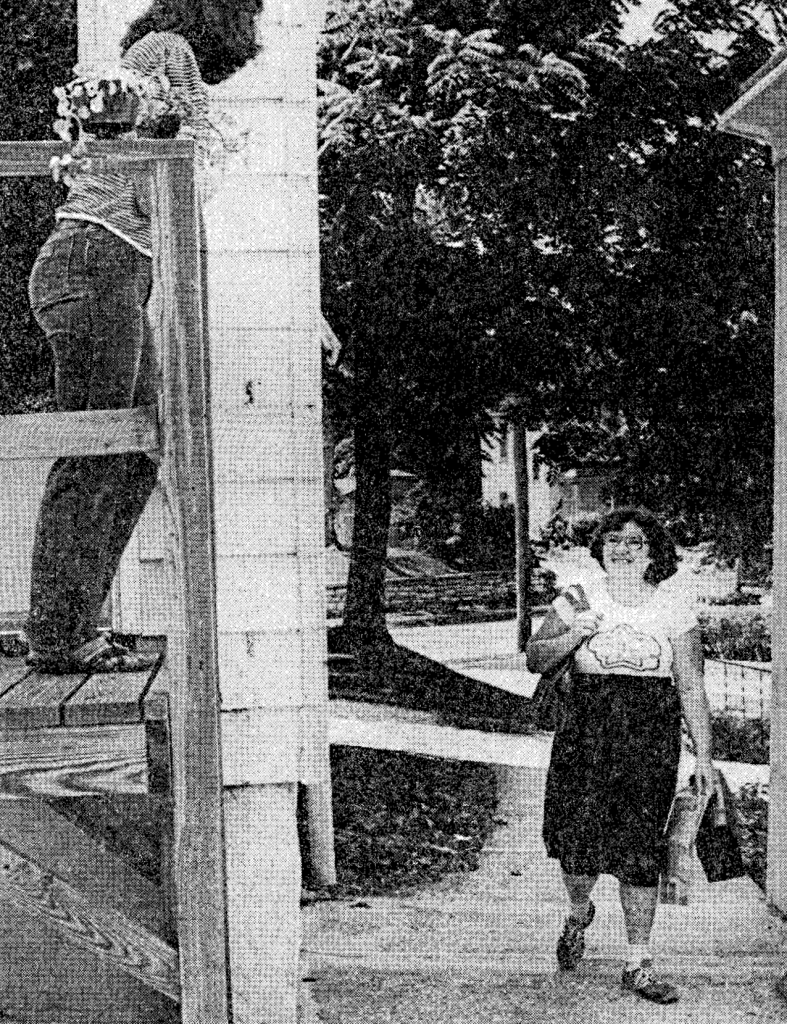
"Mrs. McGlasson welcomes Hazel Sutton home from her job at Specialized Services."
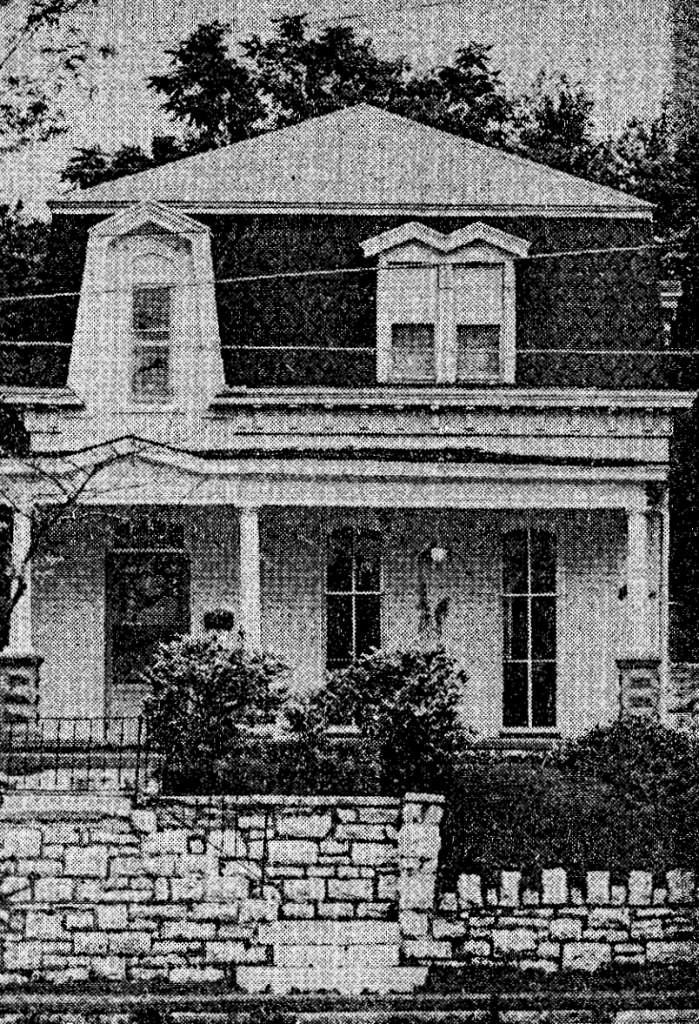
"A stately old mansion at 1002 Union in Alton as a new role as a home for a group of developmentally disabled women."
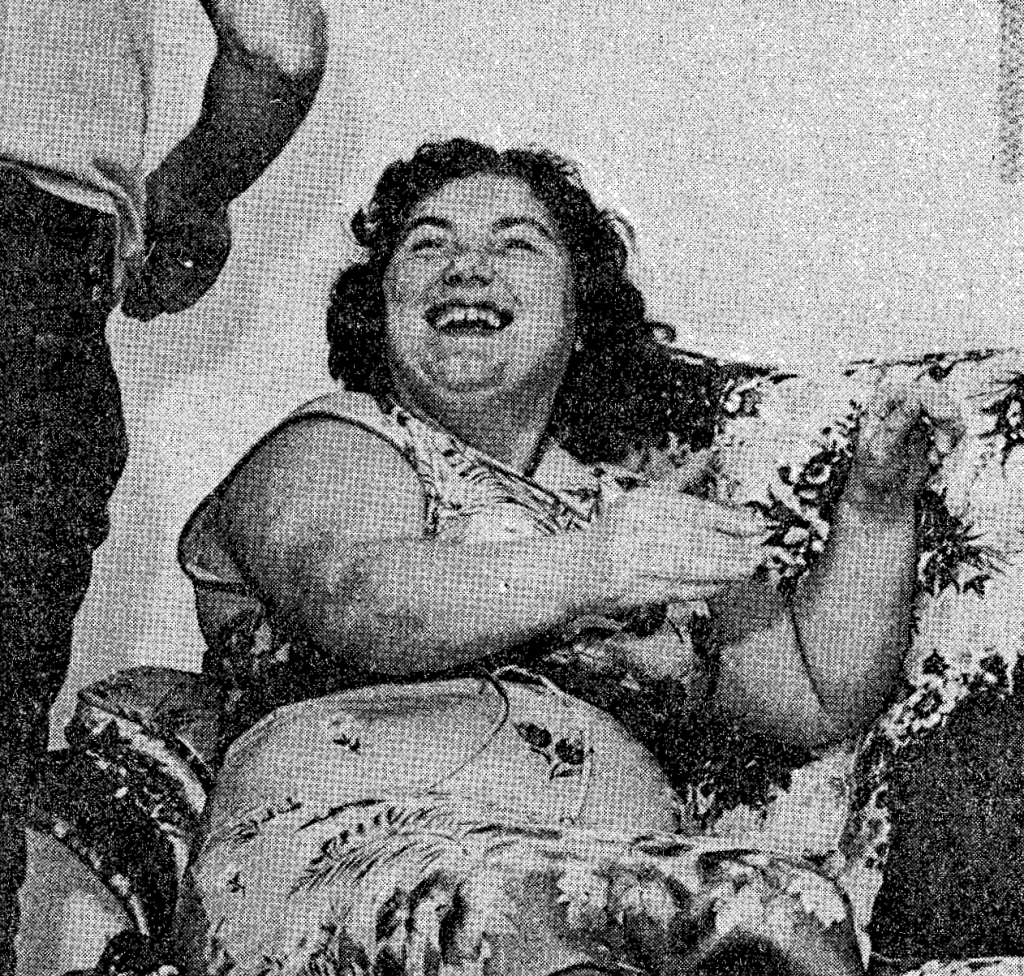
"Hazel teases Allen McGlasson about getting is picture taken."
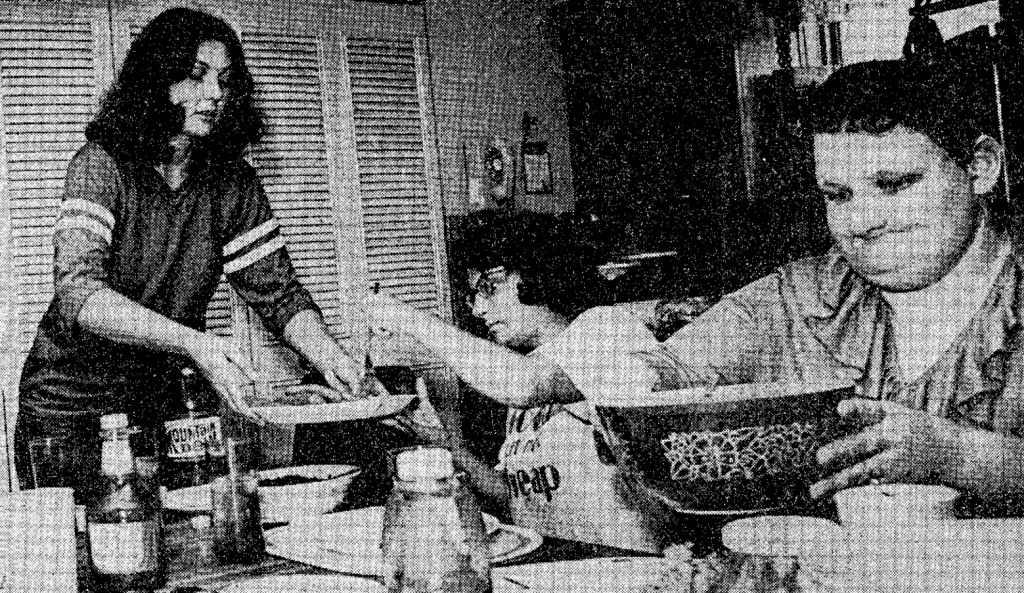
"House supervisor Gloria McGlasson offers Cheryl Houser, cook for the evening, a hot dog, as Judy Coplin passes on the carrot salad."
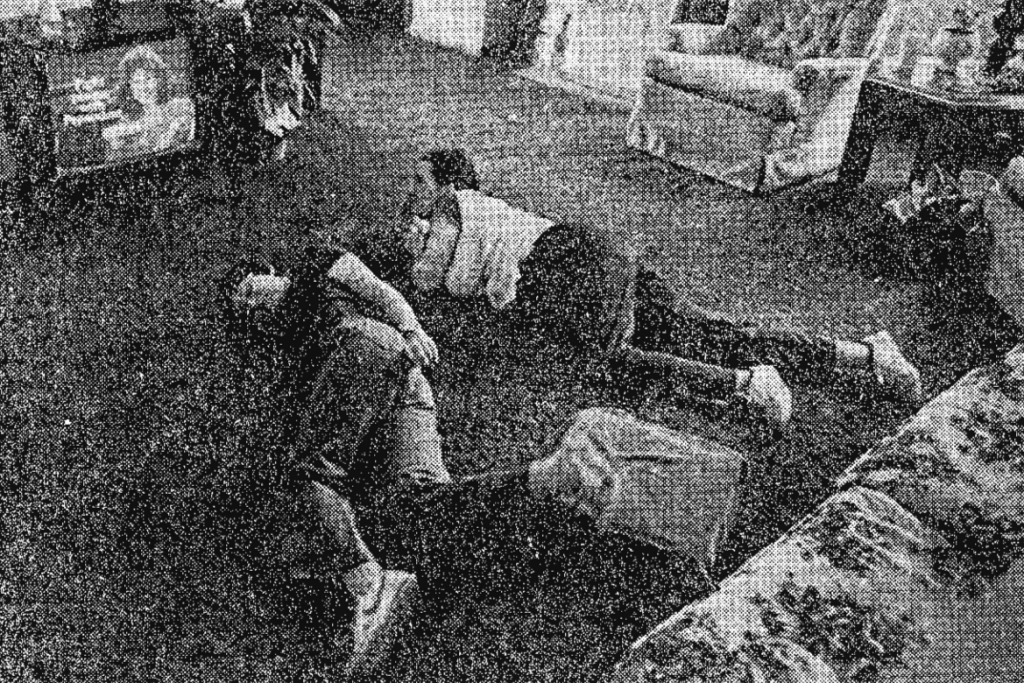
"Ruth Ann Cherry and Anita Marquis relax in the living room."
"We're Here. Then, Now, Always."
A look back in time during Developmental Disabilities Awareness Month
Throughout March, Challenge Unlimited is honoring Developmental Disabilities Awareness Month by sharing stories from our organization’s past, present, and future. Today, we reflect on July 1982, when Specialized Services, now Challenge Unlimited, opened one of its first all-female group homes, allowing these women with various disabilities to live together in a home environment, participate in the community, and achieve as much independence as possible. Below is the original article, written by Mary Ann Mazenko with photographs by Gary Bohn.
Story from:
The Alton Telegraph
Saturday, July 3, 1982
Feature by:
Mary Ann Mazenko
Photos by:
Gary Bohn
Happiness is...
A real home at last
Hazel Sutton, 32, has no doubts about her new home at 1002 Union in Alton.
“I love it here,” she said emphatically. “I don’t ever want to leave.”
This is Hazel’s first experience with living in a home setting.
She has lived in an institution all her life, but she is now part of a family—a family made up of seven other women who are also developmentally disabled.
The stately old home at the corner of Union and Central is the first group home in the area for women like Hazel. It was opened last month by Specialized Services, Inc., of Alton, in cooperation with the Illinois Department of Mental Health (IDMH) as part of a growing trend to move developmentally disabled persons out of large institutions into small group settings.
Hazel, who was born in an institution, moved to the home from a large, intermediate care facility in Troy.
“She loves it here,” said Maureen Maher, intake director at Specialized Services. “We have to continually reassure her she won’t be sent back to Troy. She has never before had anyone pay attention to her as a person.”
Hazel beamed with happiness in her new surroundings, reflecting the pleasure of all the women in their near-normal situation. They do their own laundry, cook and eat meals together. Each has one chore to do a day, such as washing dishes, with one day free. Cooking and other duties are rotated, with each getting to pick her favorite meals.
“They try very hard to please,” said Gloria McGlasson, who is a live-in house parent.
Furnishings for the home were donated by area organizations or bought with donated funds.
“We were approached by the IDMH to help in the plan to move these people to less restrictive, intermediate care surroundings,” explained Mrs. Maher. “The idea is to keep the groups small and family sized, so the individuals live in a normal family-type setting with as much independence as possible.”
During the day, the women work at Specialized Services, doing jobs contracted out by industries in the area. “Most of the work is packing, sorting, and labeling,” said Mrs. Maher, who explained that Specialized Services workers are those who cannot produce at the rate expected in regular jobs.
Specialized Services and the group home are both funded by IDMH.
A 24-hour house parent, or relief person is always present in the home to help with any problems that might occur.
Shy smiles and enthusiastic comments were plentiful among the occupants of the new home.
The women, ranging in age from 20 to 40, are either mentally retarded or affected by physical problems, such as cerebral palsy.
They came to 1002 Union from either institutions, shelter care homes, boarding homes, or from a home with elderly parents forced to make alternate long-term living arrangements for the dependent woman. All have supplemental Social Security to help pay their way at the home, plus their wages from daywork at Specialized Services.
Mrs. McGlasson said the women love the serene atmosphere and quiet of the lovely, high-ceilinged old home. “And they really enjoy the food,” she said. Mrs. McGlasson lives in the home 24 hours a day with her husband, Robert, a counseling student at Southern Illinois University at Edwardsville. He volunteers his time at the home and does minor maintenance work when it’s needed.
“Our goal is the help them be as independent as possible within the framework of family and other’s rights,” she said. “I set goals, simple at first, such as learning operation of the washing machine. Every so often, I reset goals or rearrange them. We have once-a-week meetings to allow everyone to air their differences.”
“We encourage them to stay together like a family.”
The women watch television in the large, comfortable living room downstairs, and share bedrooms on the second floor of the home.
A small kitten, named “Tiger” by the women, adds to the homey atmosphere, as do the outdoor games—jarts and badminton—set up in the backyard.
“I think these women will become part of the neighborhood. They take everyone at face value and they like everybody,” said Mrs. Maher.
“Neighborhood residents at first voiced concern when we considered purchase of the home for our group. But I think the neighbors will adopt them and become very fond of them.”
Anyone who watches Hazel’s beaming smile when she talks about her new “family” would have no doubt as to the truth of that prediction. No one could resist smiling back.
People with disabilities have always been an important part of the community— “Then, Now, Always.” We encourage everyone to recognize their contributions, fostering inclusion and respect for all. To see move coverage of 2026's Developmental Disabilities Awareness month, search #DDAM2026 on any social media platform.